Hi, I'm Andrew.
I engineer quality.
Over twenty years of quality analysis, coaching, training, and support leadership In Tech, Healthcare, Finance, & Customer support. This is the whole body of work: 27 chapters of frameworks, audits, playbooks, dashboards, and the people practices that make any of it stick.
Twenty-seven chapters.
Filter by what you came for, then open a chapter to see every section inside it. Nothing here is a summary of a summary.
Eleven interactions. Five patterns worth fixing.
I reviewed eleven agent interactions across phone and chat. Instead of scoring them and moving on, I grouped what kept happening, traced each pattern to a cause I could act on, and wrote a plan with targets attached. Open a row to see the whole chain.
Policy explained accurately, tone professional throughout, and the customer's frustration about their income never acknowledged once. Correct, and still cold.
No de-escalation playbook existed, and no guidance anywhere on holding empathy and policy at the same time.
Empathy and de-escalation workshops built on role play. Acknowledge the emotion, explain the why, then offer the path forward.
Script language delivered word for word in moments that needed a person, not a paragraph.
QA scored compliance heavily and customer experience barely at all, so agents optimized for what was being measured. They were not wrong to.
Rewrote the rubric to score proactivity and empathy alongside accuracy, and replaced fixed scripts with flexible macro templates.
The question in front of the agent got answered. The obvious next question did not, so the customer came back.
No SOP for proactive communication, and limited escalation paths for tier one agents who wanted to do more.
A Next Steps cheat sheet with anticipated follow ups and pre-approved workarounds, plus tiered escalation so tier one can flag goodwill and safety directly.
A twenty three minute delay with no check in, and background chatter audible on an unmuted hold. Competence read as chaos.
No hold protocol existed, so every agent invented their own.
Mute by default, check in every two to three minutes, and say what you are doing while they wait.
An identifying facility name surfaced before the customer verified their identity, and an assumption stated as fact in an appeal case.
Verification sequencing was assumed rather than taught, and the disclosure rules lived in an article nobody reread.
SOSA feedback one on one, verification order added to the rubric as pass or fail, and compliance framed as protection for the customer, the agent, and the company.
Run a two week sprint on empathy and proactive resolution.
Weekly calibrations so the standard stays shared rather than remembered differently by every evaluator.
Two calls from the sample became the gold standard examples, and the strongest performers led peer role play.
Frameworks turn opinions into evidence.
DMAIC proves a problem is real before I spend anyone's time on it. PDCA stops the improvement from decaying the moment attention moves on. ISO 9001 ties both back to something a customer would recognize as value.
Define the problem in the customer's words
A vague complaint is not a problem statement. I write the issue in terms of what the customer experiences, what it costs, and which critical to quality attribute it breaks. If I cannot name the CTQ, the project is not ready to start.
Measure before touching anything
Tally sheets and histograms first, opinions later. A baseline you can defend is what makes the improvement provable, and it ends the meeting where everyone remembers the numbers differently.
Analyze until the cause stops moving
Fishbone diagrams to spread the possibilities out, Pareto charts to find the few causes doing most of the damage, scatter diagrams to test whether the relationship I assumed is really there. A symptom you close comes back. A cause you close does not.
Improve with the smallest change that works
Script optimization, knowledge base cleanup, rubric changes, escalation paths. I sequence by risk reduction per unit of effort, so the first week of a sprint carries the most weight.
Control, or watch it slide back
Control charts, a real calibration cadence, and a standing spot in management review. Variation creeps back the moment nobody is watching for it, so the watching has to be somebody's actual job.
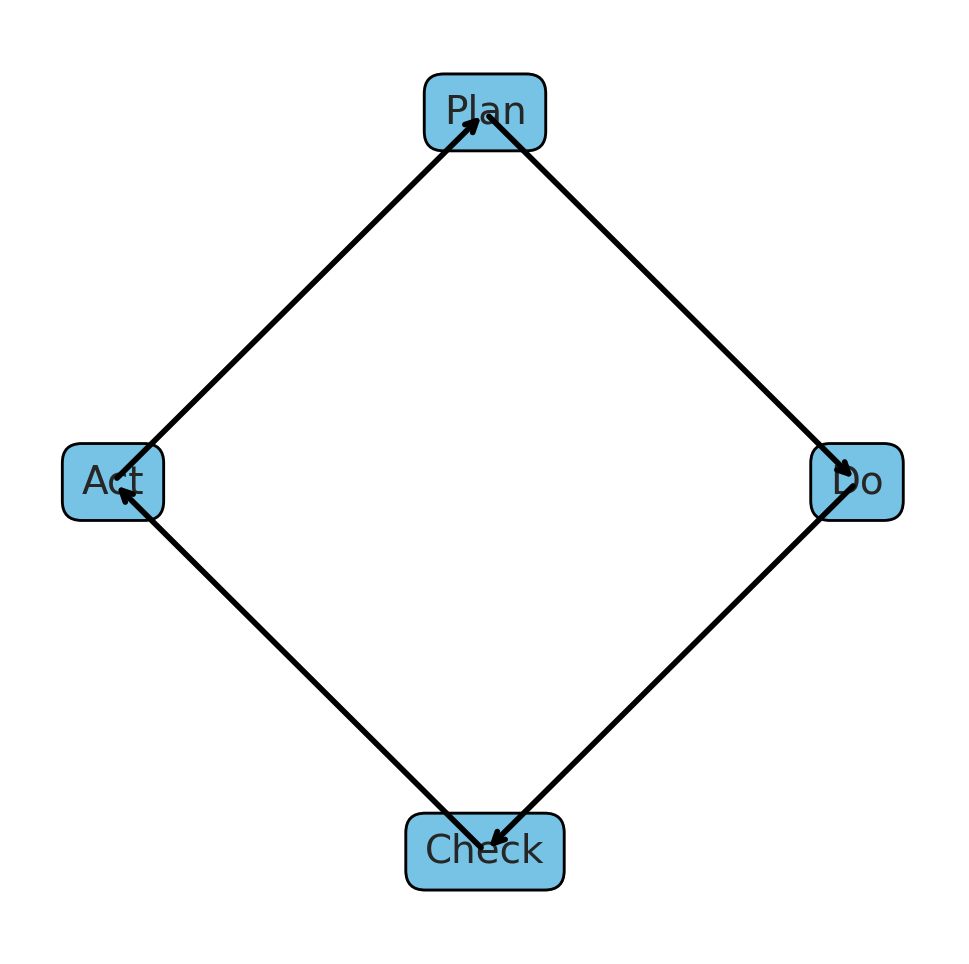
PDCA keeps it alive
Plan the change from a real root cause analysis, do it in a contained pilot, check it against the baseline, then act by standardizing what worked and discarding what did not.
The point of the loop is culture, not paperwork. When a team expects the cycle to come back around, improvement stops feeling like a project and starts feeling like the job.
Trust is slow to build and fast to lose.
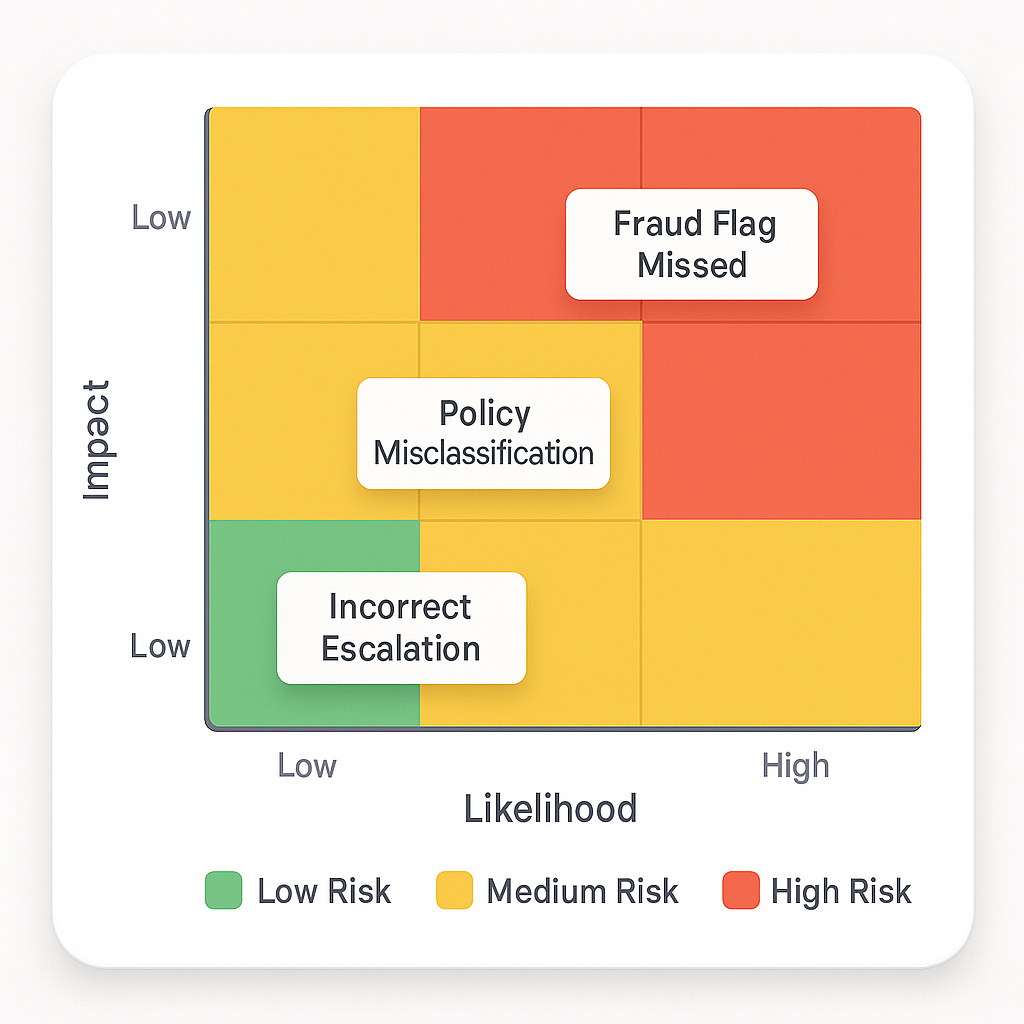
In trust and risk work a QA miss is not a lower score. It is a customer who got hurt, a regulator with a question, or a policy applied unevenly to two people in the same situation. That changes how sampling, scoring, and escalation have to be built.
Review effort follows exposure. High risk queues get depth, low risk queues get monitored, and the rationale is written down so the choice can be challenged.
Verification, disclosure, and safety handling are pass or fail. Partial credit on a privacy breach teaches exactly the wrong lesson.
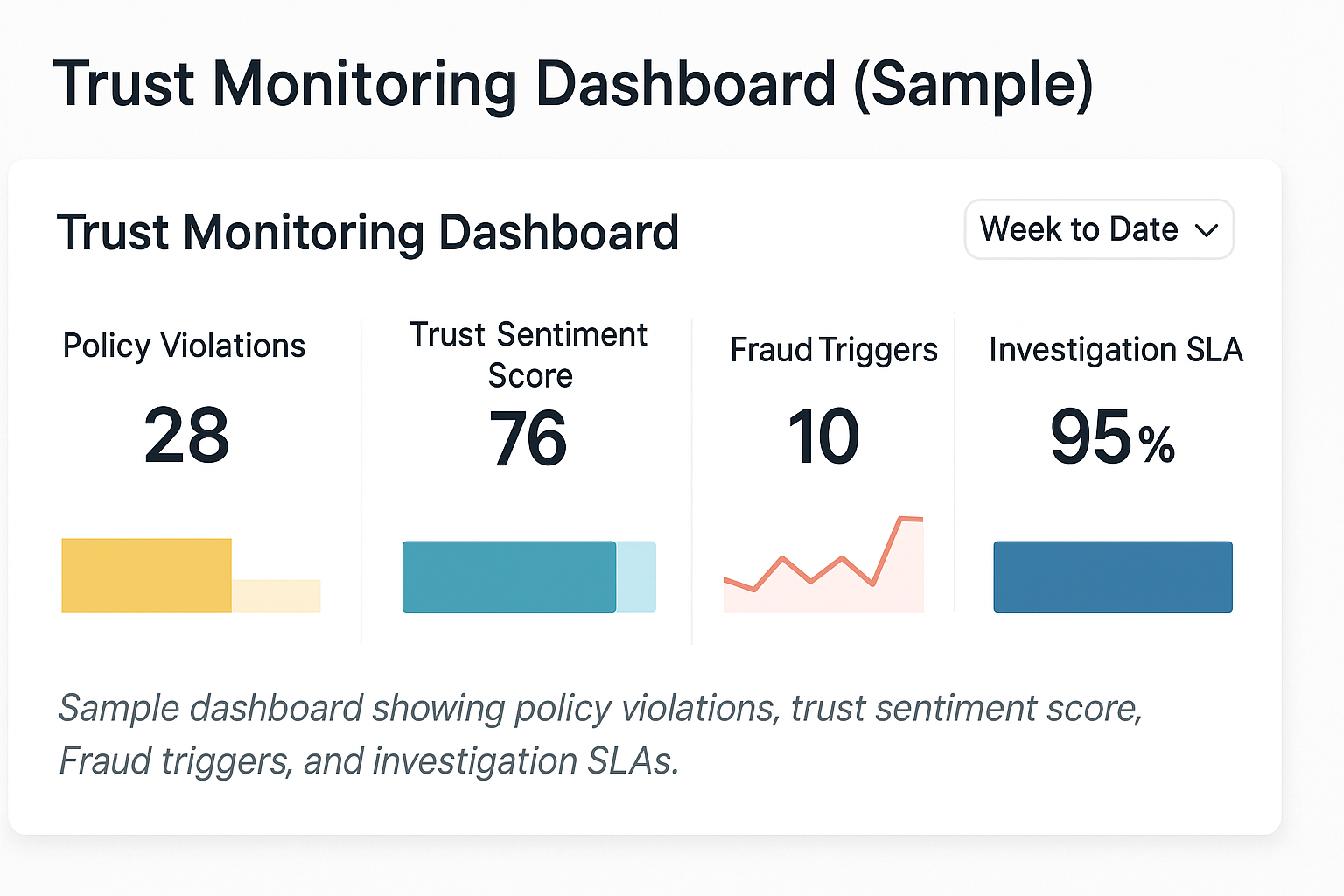
Trend detection before escalation. If QA only finds out after the complaint, QA is a report, not a control.
Compliance protects three parties at once: the customer, the agent, and the company. I coach it that way, because a rule you understand is a rule you follow under pressure.
Augmentation, not replacement.
AI can read every interaction, which no team can. It cannot tell you whether an agent made the right call for a frightened customer at 2am. I build workflows where the machine handles volume and the human handles judgment, and neither pretends to do the other's job.
Review prioritization across every channel, with uniform scoring applied the same way at hour one and hour nine.
Compliance flags, sentiment shifts, and multichannel pattern analysis across voice, chat, and email at once.
Summarizing QA data, surfacing coaching opportunities from CSAT and notes, drafting rubric candidates for a human to argue with.
Models inherit whatever the training data believed. Someone has to check the scoring for drift and for patterns that quietly punish accents, tenure, or queue type.
A technically imperfect call can still be the right call. Judgment about intent and circumstance does not survive automation.
Feedback lands because of the relationship behind it. AI can find the moment. A person has to hold the conversation.

How I actually use it
Prompt clarity decides output quality, so I write prompts with the same discipline I write rubrics. One job, stated plainly, with the reasoning visible.
Chain of thought and tree of thought patterns for analysis, synthetic datasets for calibration practice, and hallucination risk treated as a real control problem in anything customer facing. Every insight gets validated before it reaches a person's scorecard.
Same soup, different bowl
Every company renames its tools. CRMs, call analytics, reporting stacks, and whatever the internal build is called this quarter. Underneath, they do a small number of jobs.
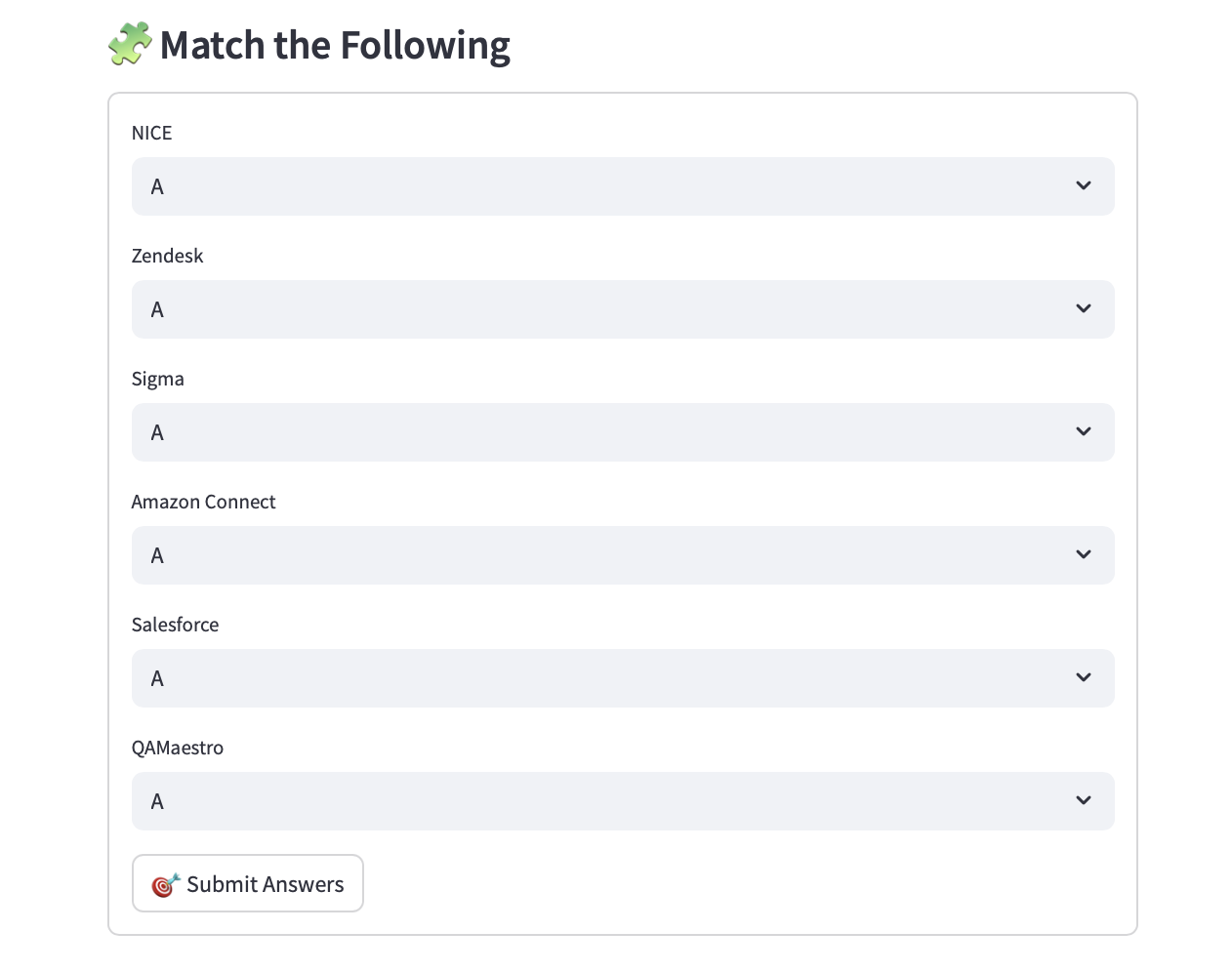
Knowing which job a tool is really doing keeps a QA program from being held hostage by a platform. Chapter XI turns it into a matching challenge, because the fastest way to learn a stack is to argue with it.
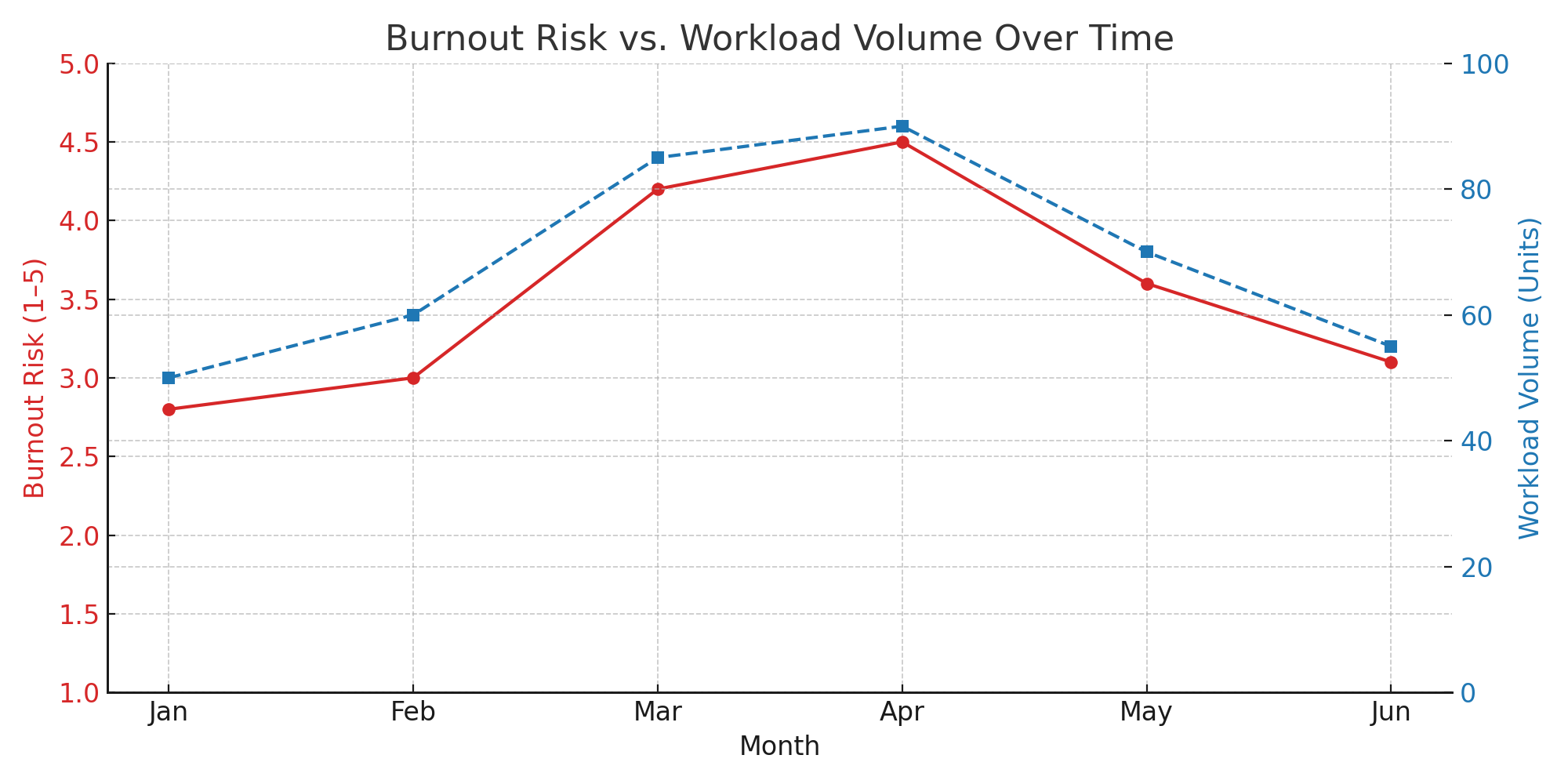
You can't metric your way out of burnout.
Nine of the twenty seven chapters are about people, because that is where quality actually lives or dies. Coaching, calibration, hiring, mentoring, burnout, and the uncomfortable chapter about how organizations waste good analysts.
Name the moment, not the personality. Timestamps beat adjectives.
If they cannot do it differently tomorrow, it is not feedback yet.
Held to the rubric as written, not the rubric as remembered.
End with ownership. The best sessions finish with their idea, not mine.
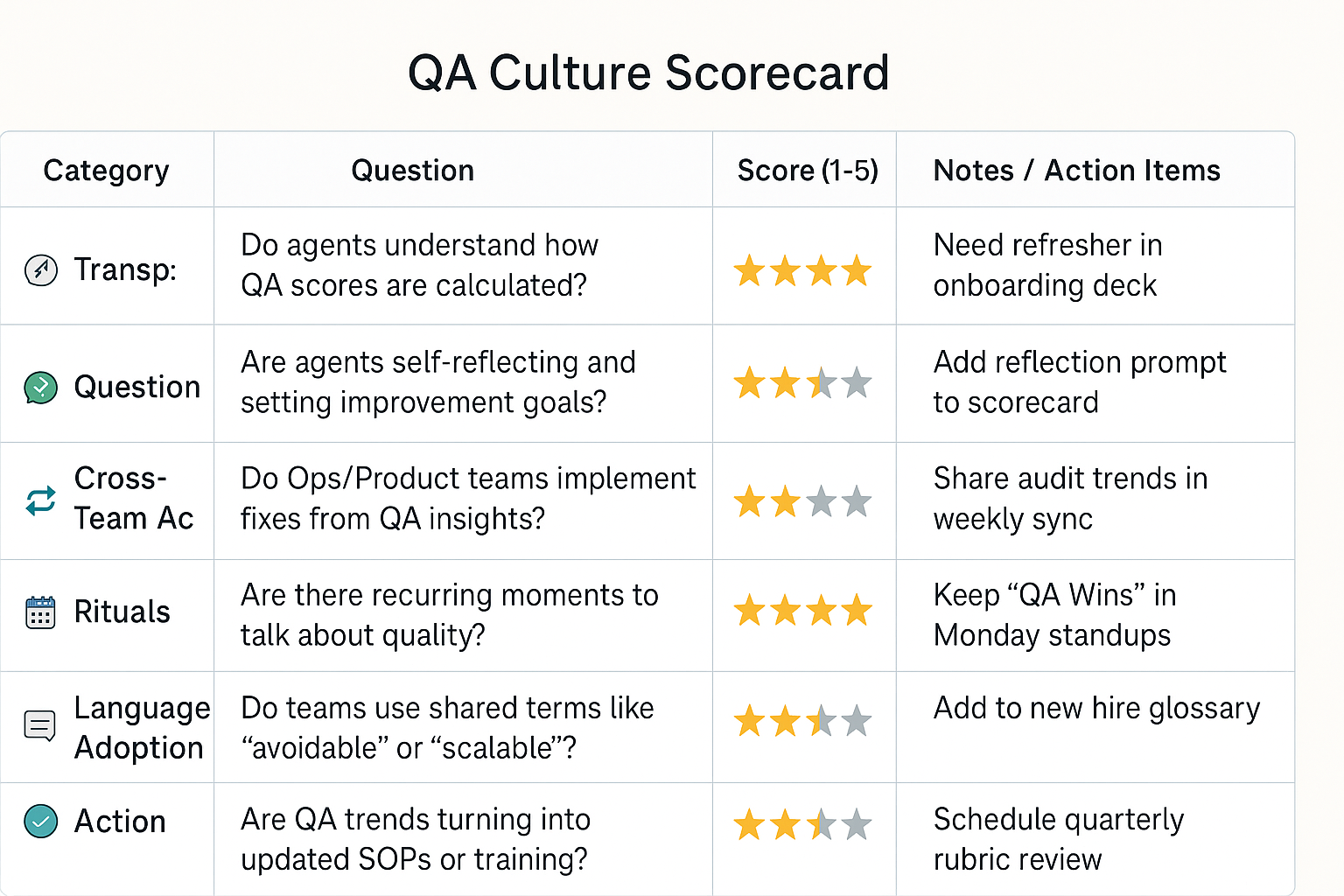
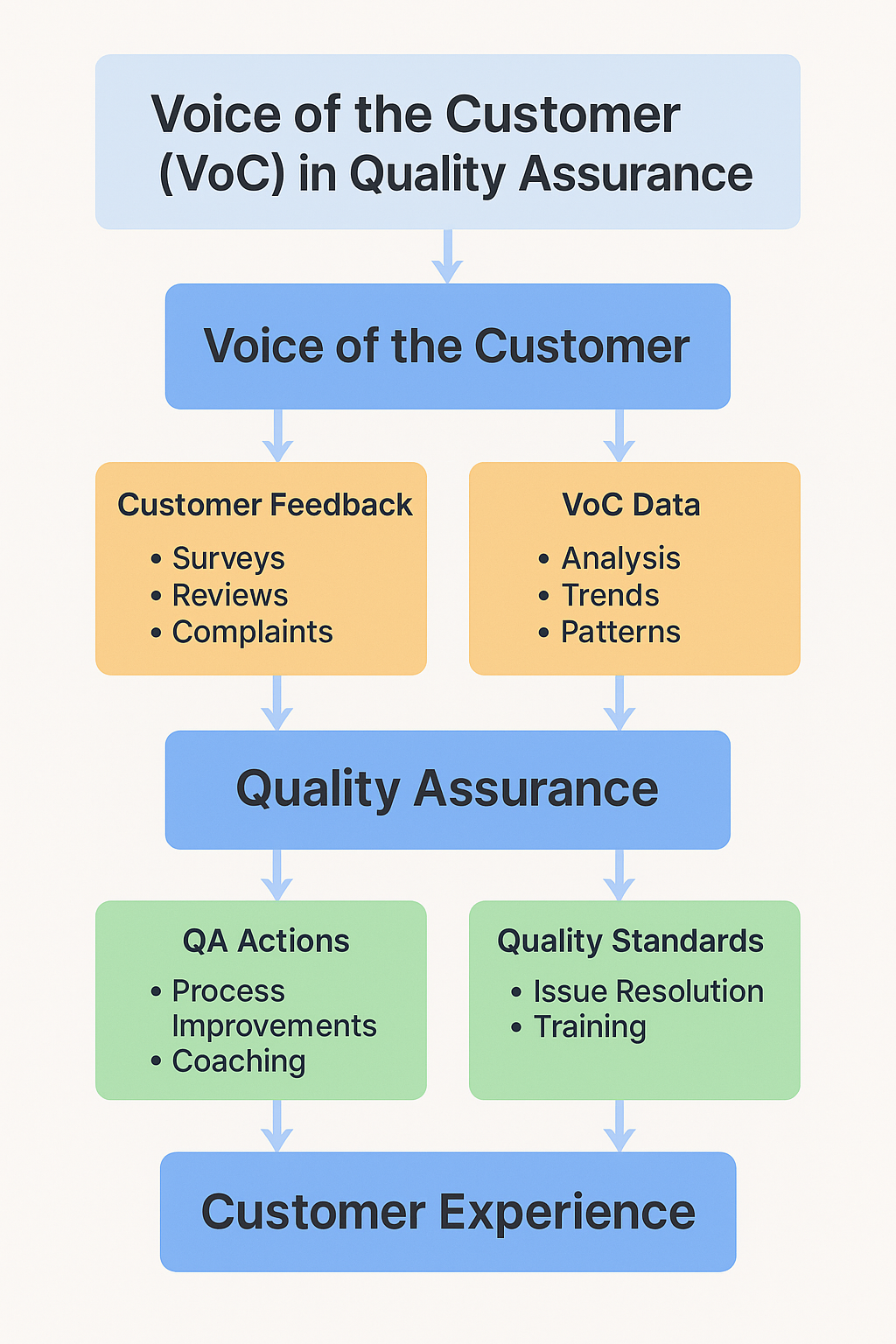
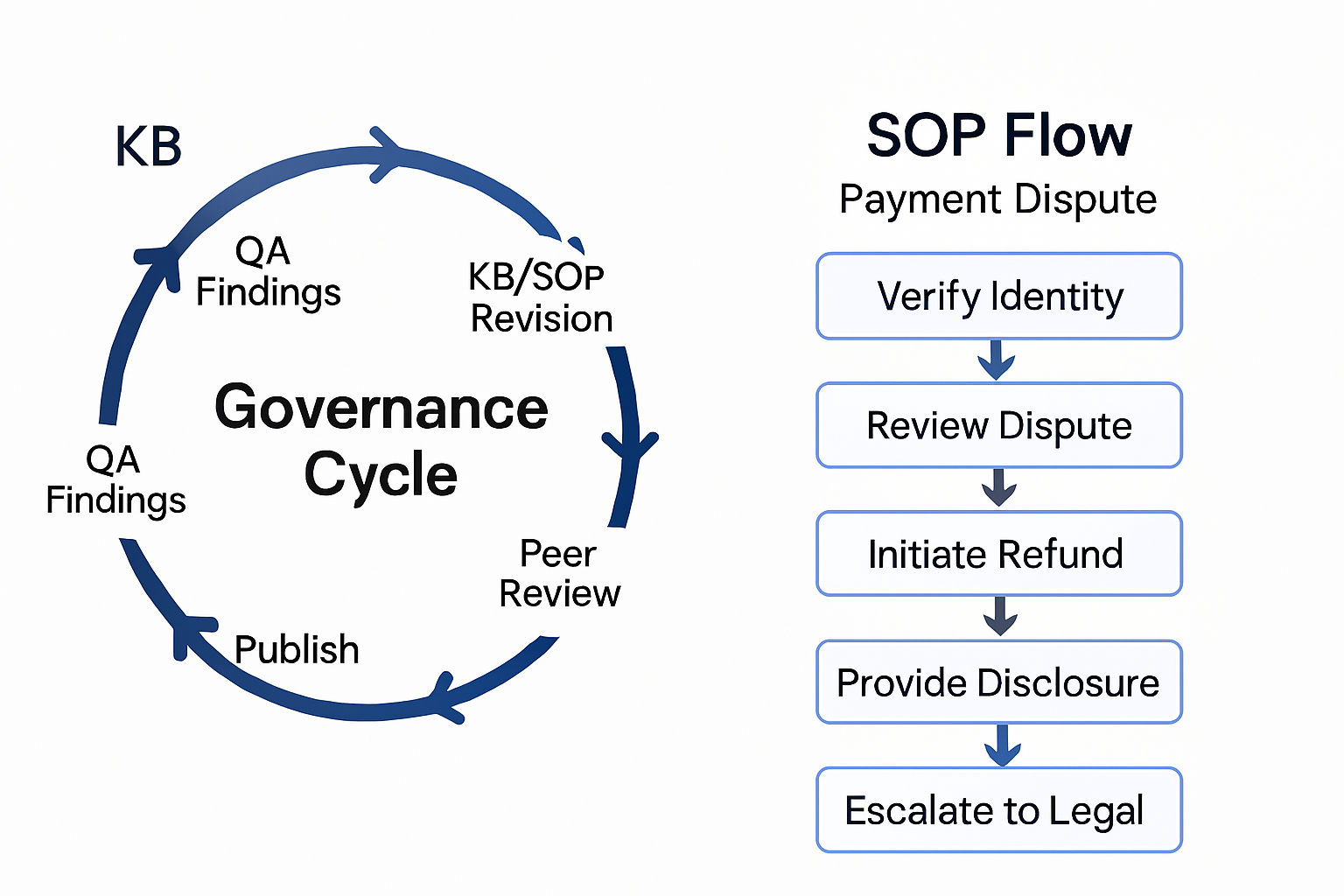
If your QA team only scores interactions, you are not building leaders. You are building robots.
Analysts should be the insight engine of the operation, and the pipeline your next leaders come from. Chapter XXV is the whole argument.
Credentials, and what each one changed.
These are declarations of intent, not decoration. Each one shifted something concrete about how I build rubrics, coach people, or read data. Click any certificate to see it full size.
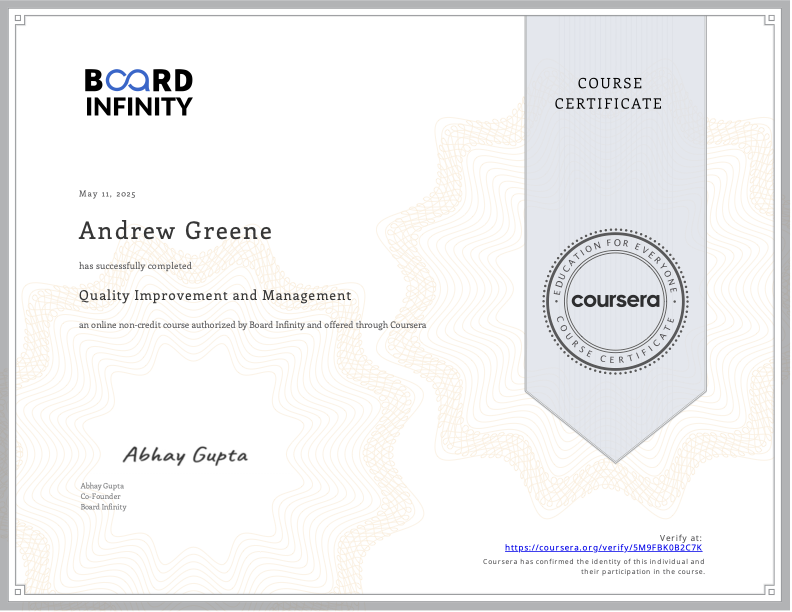
Quality Improvement and Management
A masterclass in operational clarity: when to apply quality control versus quality improvement, using Bloom's taxonomy to turn a vague customer want into an implementation ready requirement, and what it takes to implement and audit ISO 9001.
Every QA form I build now traces back to a measurable standard or a stated customer value.
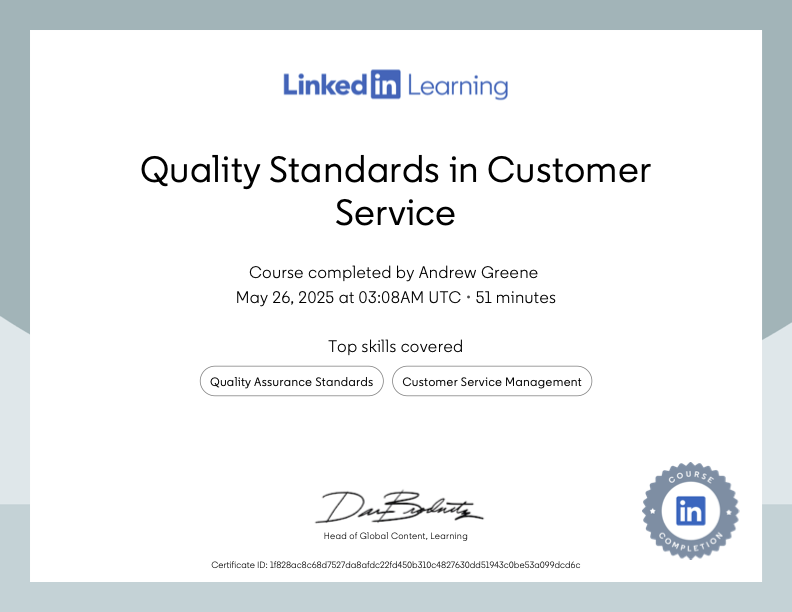
Quality Standards in Customer Service
Led by Brad Cleveland. This one changed how I think about scaling empathy and making excellence repeatable: define quality from the customer's side, then tie coaching frameworks directly to the standard.
I turned scorecards into self-reflective tools instead of compliance logs.
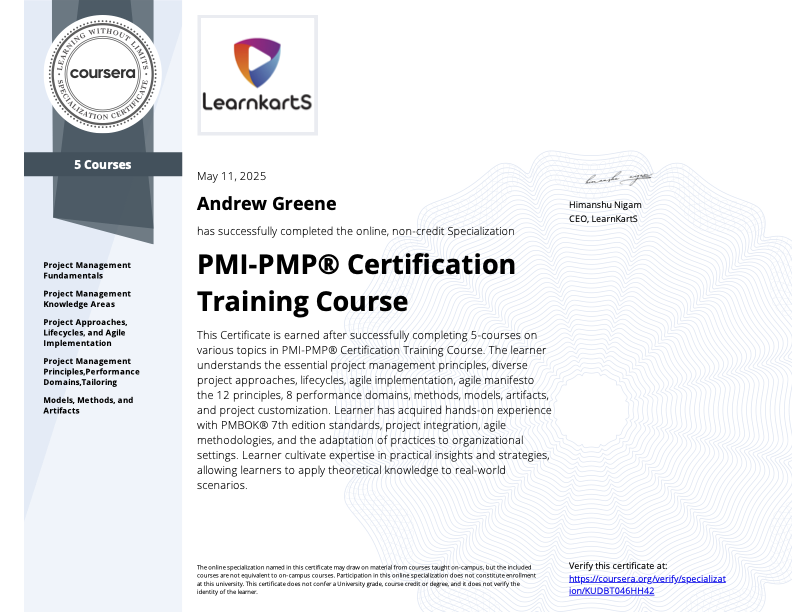
PMI-PMP Certification Training
Leadership through clarity. The five process groups, tailoring agile and hybrid approaches for fast moving QA needs, and balancing scope, time, cost, quality, and risk without pretending one of them is free.
Calibration rollouts now get a real project structure, which makes QA a driver of delivery.
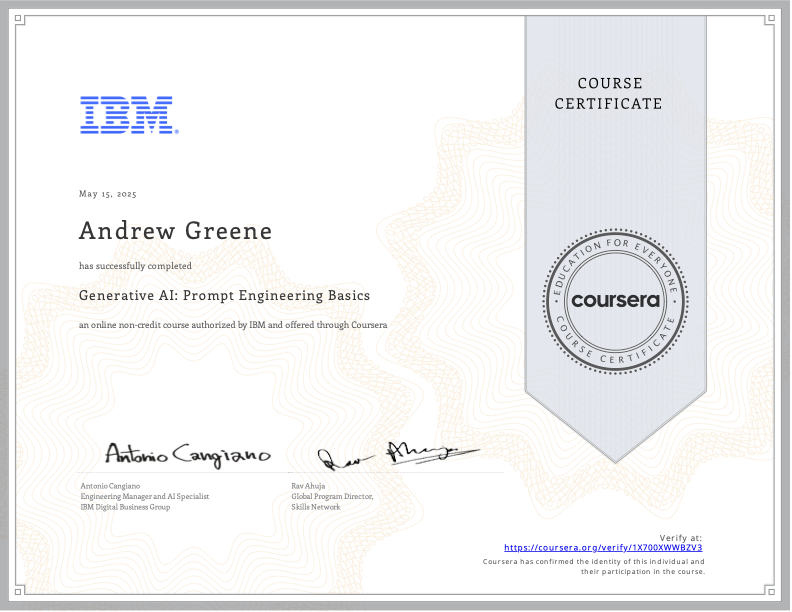
Generative AI: Prompt Engineering Basics
Past the hype and into practical, ethical application: how prompt clarity drives output accuracy, chain of thought and tree of thought patterns, and mitigating hallucination risk in customer facing tools.
AI speeds up QA synthesis. It never signs off on a review.
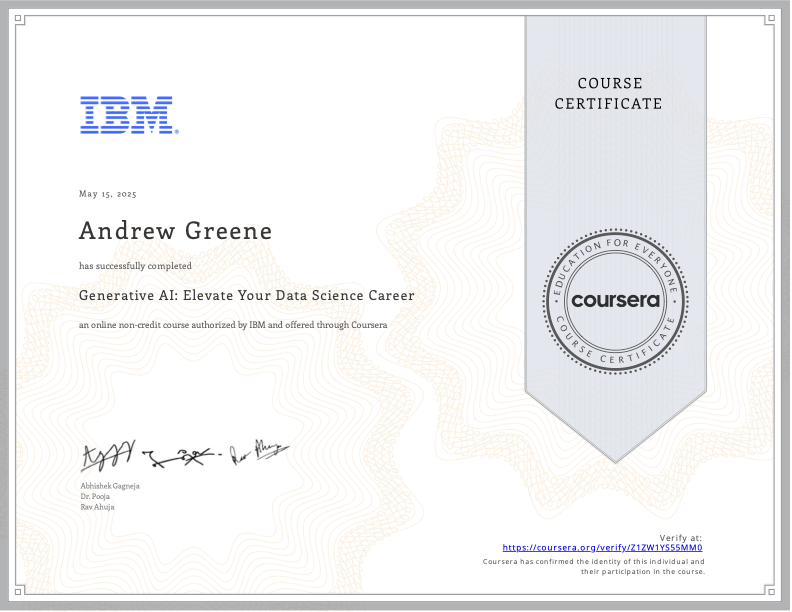
Generative AI: Elevate Your Data Science Career
Marrying AI insight with operational performance: querying and summarizing QA data, generating synthetic datasets for calibration practice, and flagging coaching opportunities at scale from CSAT, sentiment, and notes.
AI surfaces the trend, a human validates the nuance before anyone is coached on it.
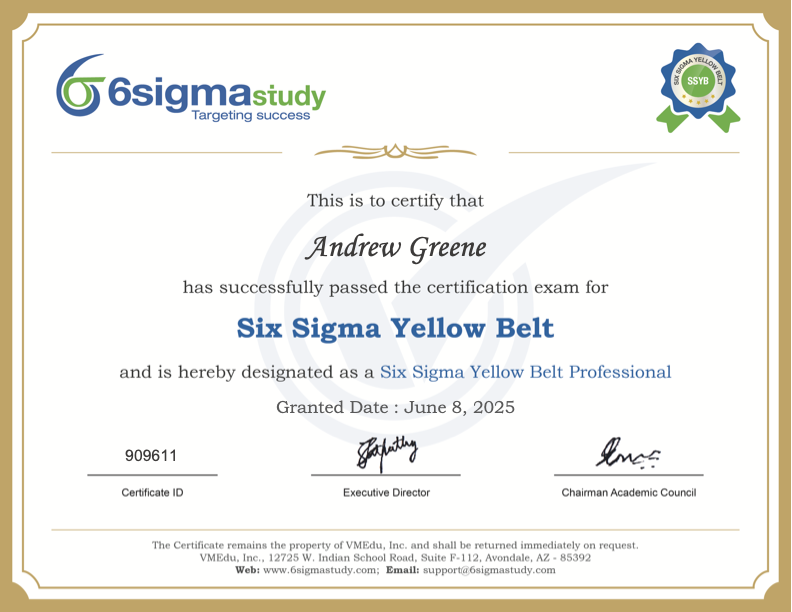
Six Sigma Yellow Belt
The foundation: DMAIC, critical to quality, cost of poor quality, and the tool set that makes variation visible. Tally sheets, histograms, flowcharts, fishbone diagrams, Pareto charts, scatter diagrams, control charts.
This is what moved me from reactive QA to proactive improvement.
The mind behind the metrics.
Over two decades in quality analysis, performance evaluation, training, leadership, mentoring, and technical support. I design training programs that stick, coach teams that outperform, and improve service quality across large scale operations.
Track record of reducing errors, lifting CSAT, and driving process improvement through data. Technically proficient in SQL, Linux, Python, and cybersecurity fundamentals, with deep CRM, analytics, and monitoring tool experience.
Build with clarity, measure with honesty, coach with purpose, and quality becomes inevitable.
Bring me the problem nobody can name yet.
I'm best in the messy middle: quality programs producing scores nobody trusts, rubrics rewarding the wrong thing, teams working hard and still missing the mark.